Use case: Automated repair of shredder blades for tire recycling
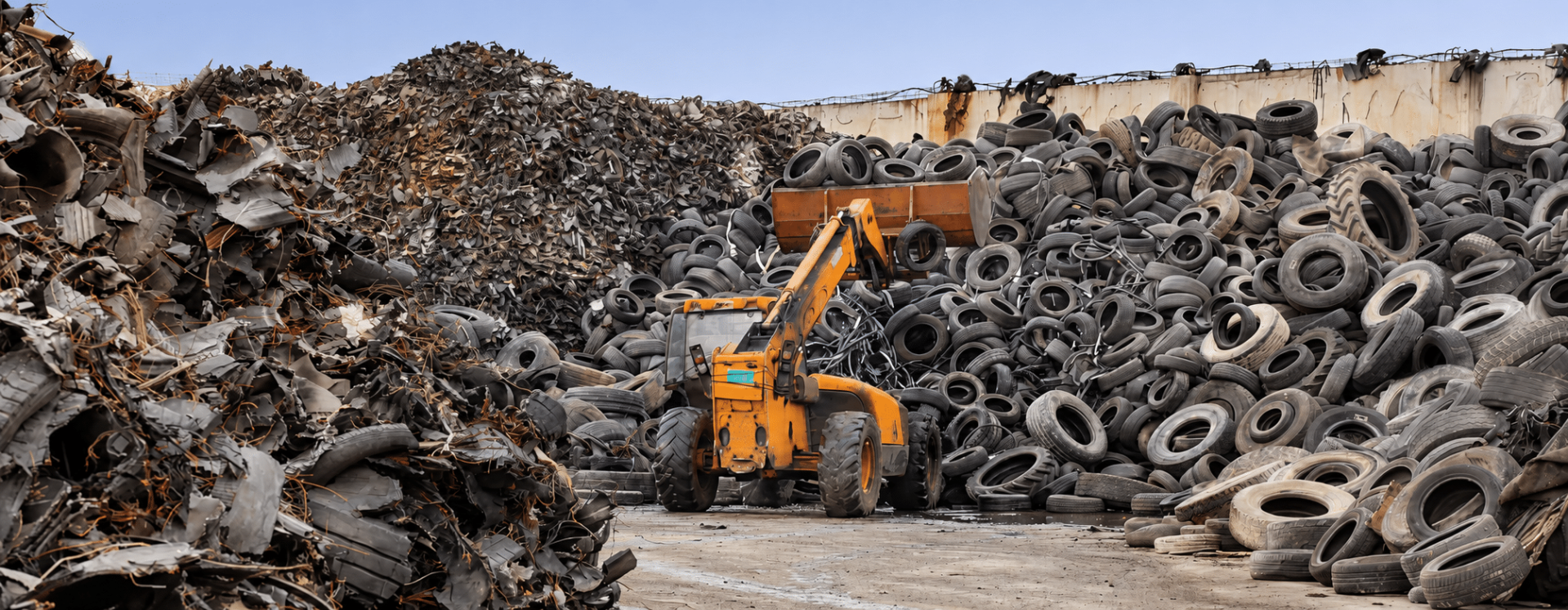
When recycling truck tires, for example, shredding tools are subject to heavy wear because they have to break down both the rubber and the embedded steel carcass. The geometry of the rotating and stationary blades is critical to how they work together. As the blades wear, their profiles change, altering the clearance required for shredding. This reduces shredding efficiency and makes blade repair necessary.
OSCAR PLT GmbH develops automated repair solutions that restore worn shredder blades using laser metal deposition with wire. In a customer project, OSCAR PLT GmbH worked with S.K.M. Informatik to develop a process that combines 3D scanning, digital toolpath planning and precise material deposition. The repaired blades reach the required profile directly after deposition and can be put back into service without post-machining.

Automated repair of shredder blades for tire recycling
Heavy wear and precise blade geometry
In the customer’s shredder, the rotor blades are mounted on a shaft. They pass the stationary stator blades to shred the incoming truck tires. Compared with wood shredding, this application places different demands on the blades because they have to process both flexible rubber and the steel carcass.
The rotor and stator blades need a defined clearance to work together reliably. The previous repair method involved depositing extra material and then using a template and angle grinders to grind the blades to the required profile by hand. This consumed additional material and required considerable physical effort.
From individual wear patterns to a digital repair strategy
Even when blades are replaced at fixed intervals, each blade wears differently. The deposition path is therefore tailored to the individual blade.
Each blade is clamped in the system and scanned in 3D. The measured geometry is compared with the target CAD geometry. The difference between the two shows where material is missing and how the blade profile needs to be rebuilt. The resulting digital toolpath guides the automated deposition process.
Precise material deposition without post-machining
The customer project uses wire-based laser metal deposition (wire LMD) with a ProFocus 2000 compact system and Adur 600 filler wire. Laser power, wire feed and motion are tailored to the geometry that needs to be restored on each blade.
In several feasibility tests, OSCAR PLT GmbH and S.K.M. Informatik demonstrated that an automated process could replace the previous manual steps. The process rebuilds the missing volume with a geometric accuracy of approximately 1 mm. In this application, the blades reach the required profile without subsequent grinding or milling.
By scanning each blade individually, planning the toolpath digitally and depositing material close to the final profile, the process reduces excess filler material and subsequent machining. It also automates much of the physically demanding manual repair work.

Digital repair workflow developed with S.K.M. Informatik
OSCAR PLT combines its ProFocus welding technology in a laser-safe cell and its process expertise with digital planning and automation technology from S.K.M. Informatik. The coordinated steps make it possible to repair blades with different wear patterns consistently.

The workflow consists of four steps.
| • | Scan: Capture the worn geometry of each blade. |
| • | Compare: Determine how much material is missing by comparing the scan with the target CAD geometry. |
| • | Plan: Define the repair strategy and generate the deposition paths. |
| • | Rebuild: Use automated wire LMD to restore the profile of each worn blade. |
The project shows how an integrated digital workflow can make recurring repairs more economical and reduce material use. Whether other shredding tools can also be repaired without post-machining depends on the material, part geometry, damage and required tolerances.
Process development and system integration
OSCAR PLT GmbH develops both the welding process and the equipment it requires, including complete systems. This includes workholding, integration of the scanning system, and suitable motion and positioning systems. We design the individual steps to work together reliably and fit into your production workflow.
The modular ProFocus system provides the basis for controlled material deposition. The OSCAR Welding Cell provides a platform for turnkey systems tailored to the application. The configuration depends on tool geometry, production volumes and automation requirements.

Can your shredder blades be repaired automatically?
These questions help determine whether automated repair is feasible.
| • | Which tools need to be refurbished, and what loads do they face in service? |
| • | What wear patterns are present, what are the base materials, and do the tools have any existing coatings? |
| • | Are CAD data or other suitable references available for the target geometry? |
| • | Which profiles, tolerances and installation clearances must the repaired tools meet? |
| • | What are the required volumes, tool change intervals and level of automation? |
A feasibility study can establish which combination of materials and repair strategy is suitable, what geometric accuracy is achievable and how the process can be automated.
Looking to automate the repair of shredder blades for tire recycling or similar components? Contact OSCAR PLT GmbH to discuss your tools, your current repair process and what you need from an automated solution.

ProFocus is an intuitive, modular laser welding system that brings modern laser cladding into everyday production—enabling automated repair, coating and additive build-up of metal components with reduced material use, minimal rework, and stable, reproducible quality.

The compact version combines all the benefits of ProFocus technology in an innovative laser head whose efficient design enables completely new applications and geometries.
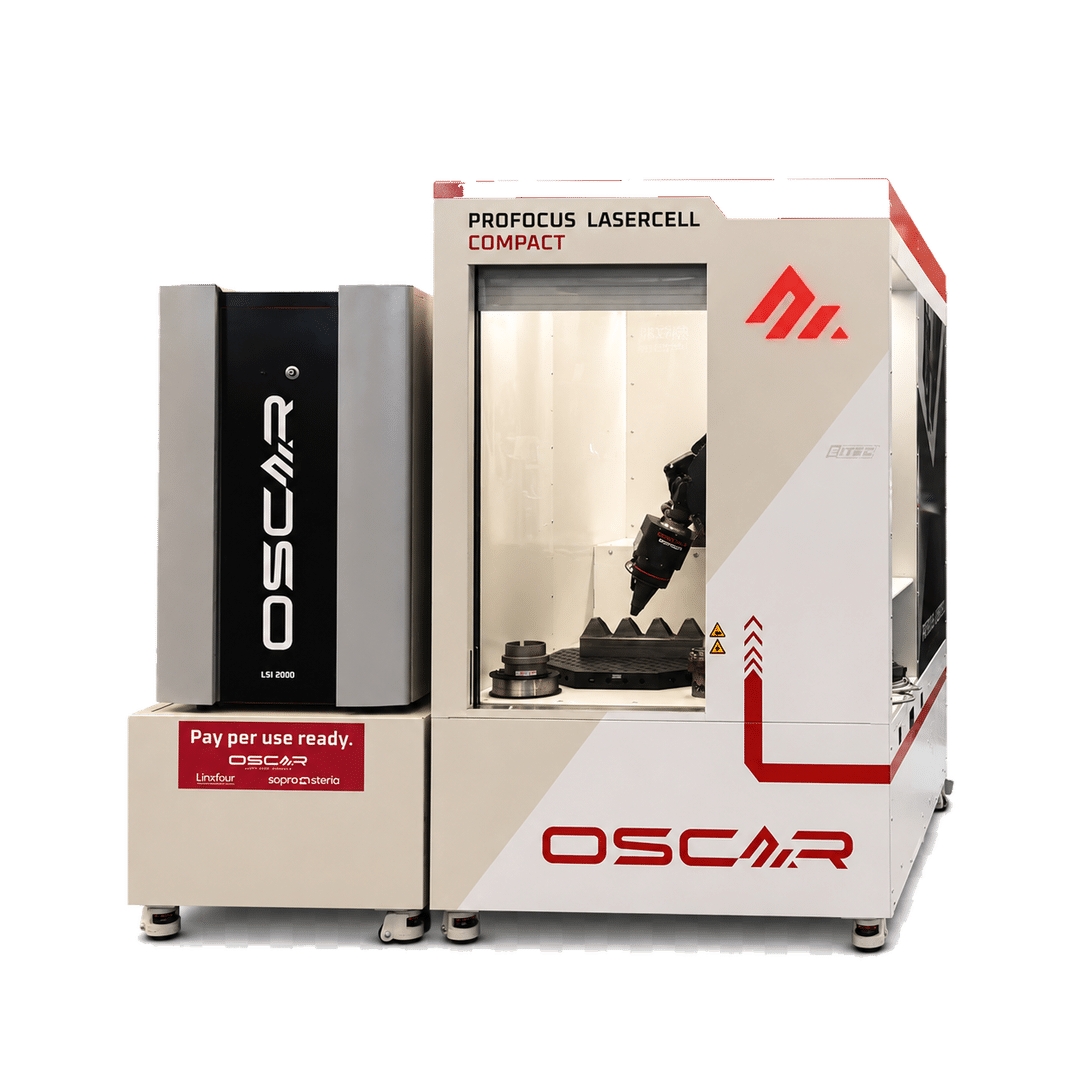
Turnkey laser cell for laser cladding, metal 3D printing, repair and coating of small to medium-sized components – compact, flexible and easy to use.
You are currently viewing a placeholder content from Brevo. To access the actual content, click the button below. Please note that doing so will share data with third-party providers.
More InformationYou need to load content from reCAPTCHA to submit the form. Please note that doing so will share data with third-party providers.
More InformationYou need to load content from Turnstile to submit the form. Please note that doing so will share data with third-party providers.
More InformationYou are currently viewing a placeholder content from hCaptcha. To access the actual content, click the button below. Please note that doing so will share data with third-party providers.
More InformationYou need to load content from reCAPTCHA to submit the form. Please note that doing so will share data with third-party providers.
More InformationYou are currently viewing a placeholder content from Turnstile. To access the actual content, click the button below. Please note that doing so will share data with third-party providers.
More Information