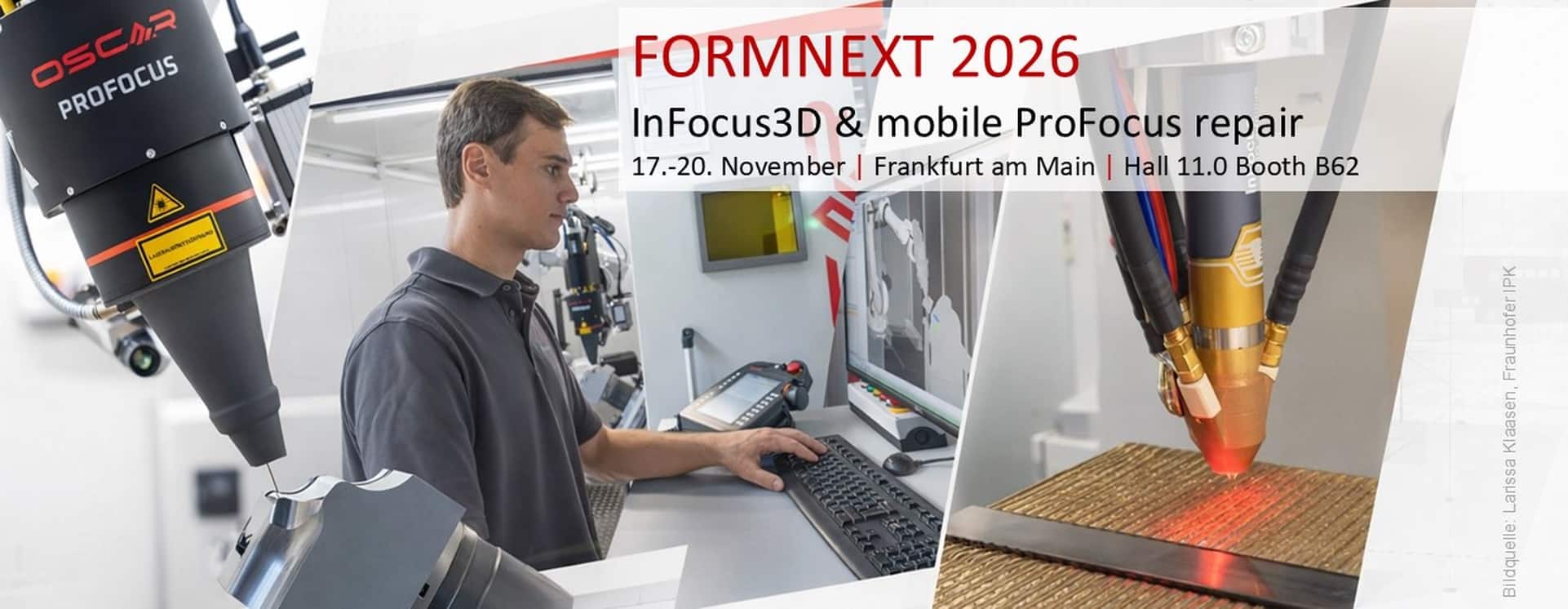
Application: Wear-resistant coatings for shredder knives and ploughshares
Abrasive wear on shredder knives and ploughshares creates a recurring need for refurbishment or replacement. Manufacturers and maintenance providers therefore need to extend the service life of these components and make their processing cost-effective.
OSCAR PLT develops coating processes based on laser metal deposition with wire. The shredder knife application demonstrates how wear protection and refurbishment can be combined with automated series processing. Ploughshares used in soil cultivation can also be provided with a wear-resistant layer using this approach.
Wear protection for heavily loaded working surfaces
Applying protective layers where they are needed
Not all areas of a shredder knife are subjected to the same loads. Localised material deposition allows particularly exposed surfaces to be provided with suitable wear protection. The base body retains its structural function, while the deposited layer is tailored to contact with the material being shredded.
Alongside wear resistance, functional geometry is essential: the position, thickness and contour of the coating must suit the respective knife design. OSCAR PLT takes these requirements into account when selecting the filler material and developing the deposition strategy.
Returning worn knives to service
When a shredder knife is worn, the first step is to assess whether its condition permits refurbishment. Relevant factors include the remaining cross-section, the base material and any additional damage.
Where the component is suitable, missing material can be added and the required contour restored. Necessary preparation and finishing operations are included in process planning. This allows refurbishment to be assessed as a technically and economically viable alternative to replacement.
From an individual knife to series processing
For recurring coating tasks, component fixturing, positioning and the welding sequence must be coordinated. A defined fixture provides repeatable processing conditions, while stored programs specify the toolpaths and material deposition for each component type.
Processing programs are adapted to accommodate different knife variants. Production volumes, changeover times and component handling determine the appropriate level of automation.
A proven application
In previous customer projects, OSCAR PLT processed shredder knives and ploughshares exposed to severe abrasive wear. Wire LMD was used with a ProFocus 2000 kompakt system. Depending on the application, solid or flux-cored wires were used as filler materials.
The documented results include components returned to service, increased service life and automated coating in series production. These projects demonstrate both the benefits for the wear component and the potential to incorporate the developed deposition process into a recurring production workflow.
The interaction between material and process
High hardness alone does not make a coating suitable for an application. Other mechanical loads, the properties of the base material and the bond between the layer and the substrate must also be considered.
During laser metal deposition, wire is continuously fed into the processing zone, melted and deposited onto the component surface. Laser power, wire feed rate and motion control work together with the filler material to determine how the layer is formed.
Locally controllable energy input helps limit the thermal load on the component. The achievable layer thickness and surface quality, as well as any required finishing, are determined for the respective material combination and geometry.
What does your coating system need to deliver?
The following questions are particularly relevant when designing a system:
| • | Will new components be coated or worn parts refurbished? |
| • | Which surfaces, contours and base materials need to be processed? |
| • | What loads occur during operation? |
| • | What layer geometries and tolerances are required? |
| • | What production volumes, component variants and cycle times are planned? |
| • | How will components be loaded, fixtured and changed over? |
| • | Should the process be integrated into an existing system or implemented in a standalone production cell? |
If the material combination or coating strategy has not yet been defined, a feasibility study establishes the technical basis. Welding trials and evaluation of the resulting layers provide the foundation for further process and system planning.
Process development and automation from a single source
OSCAR PLT combines welding process development with suitable system technology. This includes the processing head with wire feed, component fixturing, appropriate motion and positioning systems, and process control.
The modular ProFocus system can be configured to meet production requirements. ProFocus Compact is available for compact integration into existing machines, robotic systems or application-specific equipment.
Would you like to extend the service life of your shredder knives or ploughshares and automate their coating? Talk to us about your components and planned production workflow.

Task: Localised wear protection coatings
Base material: heat-treated steel
Material: Welding Alloys Hardface HC LD/ wire
Component weight: 2 kg
Manufacturing time: 1 h

Task: Localised wear protection coatings on shaft seating surfaces
Base material: GGG 60/ EN-GJS-600-3
Material: quEiSi® (FeCrMoVC) / wire
Component weight: 15 kg
Processing time: 2.5 h

ProFocus is an intuitive, modular laser welding system that brings modern laser cladding into everyday production—enabling automated repair, coating and additive build-up of metal components with reduced material use, minimal rework, and stable, reproducible quality.

The compact version combines all the benefits of ProFocus technology in an innovative laser head whose efficient design enables completely new applications and geometries.
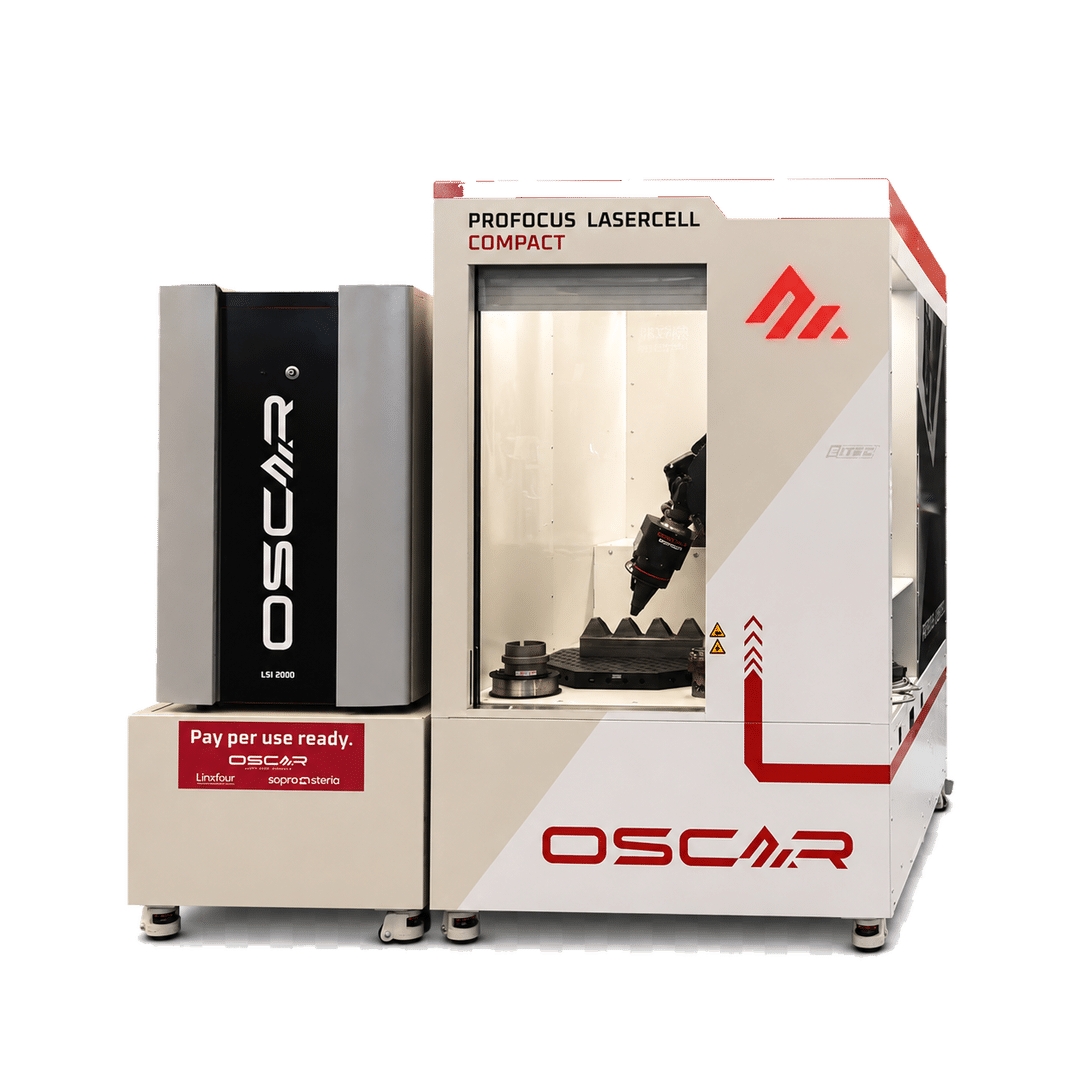
Turnkey laser cell for laser cladding, metal 3D printing, repair and coating of small to medium-sized components – compact, flexible and easy to use.
You are currently viewing a placeholder content from Brevo. To access the actual content, click the button below. Please note that doing so will share data with third-party providers.
More InformationYou need to load content from reCAPTCHA to submit the form. Please note that doing so will share data with third-party providers.
More InformationYou need to load content from Turnstile to submit the form. Please note that doing so will share data with third-party providers.
More InformationYou are currently viewing a placeholder content from hCaptcha. To access the actual content, click the button below. Please note that doing so will share data with third-party providers.
More InformationYou need to load content from reCAPTCHA to submit the form. Please note that doing so will share data with third-party providers.
More InformationYou are currently viewing a placeholder content from Turnstile. To access the actual content, click the button below. Please note that doing so will share data with third-party providers.
More Information